
“If the dream is a translation of waking life, waking life is also a translation of the dream. The mind loves the unknown. It loves images whose meaning is unknown, since the meaning of the mind itself is unknown,” said Rene Magritte.
Filmmakers of every country have such an impudent, “hooligan” and rebellious category of directors and there is Aleko Tsabadze among us. Few would dare to show a reality radically different from the traditional Soviet narrative in the Soviet Union (although, already at a time when the empire was counting down the last years of its existence) and even in his debut-diploma work, in which crime, prostitution, gambling and drug addiction alternate. Everything, at a glance, begins with a harmless lost bet, which turns out to be fatal for a young man.
ყველა ქვეყნის კინემატოგრაფს ჰყავს ასეთი თავზეხელაღებული, „ხულიგანი“ და მეამბოხე რეჟისორთა კატეგორია, ჩვენში კი ასეთი ალეკო ცაბაძეა. ცოტა თუ გაბედავდა საბჭოთა კავშირში (მართალია, უკვე იმ პერიოდში, როცა იმპერია არსებობის ბოლო წლებს ითვლიდა), თანაც სადებიუტო–სადიპლომო ნამუშევარში, ტრადიციული საბჭოური ნარატივისგან რადიკალურად განსხვავებული რეალობის ჩვენებას, რომელშიც კრიმინალი, პროსტიტუცია, აზარტული თამაშები და ნარკომანია ერთმანეთს ენაცვლებიან. ყველაფერი კი, ერთი შეხედვით, უწყინარი წაგებული სანაძლეოთი იწყება, რომელიც საბედისწერო გამოდგება ახალგაზრდა კაცისთვის.
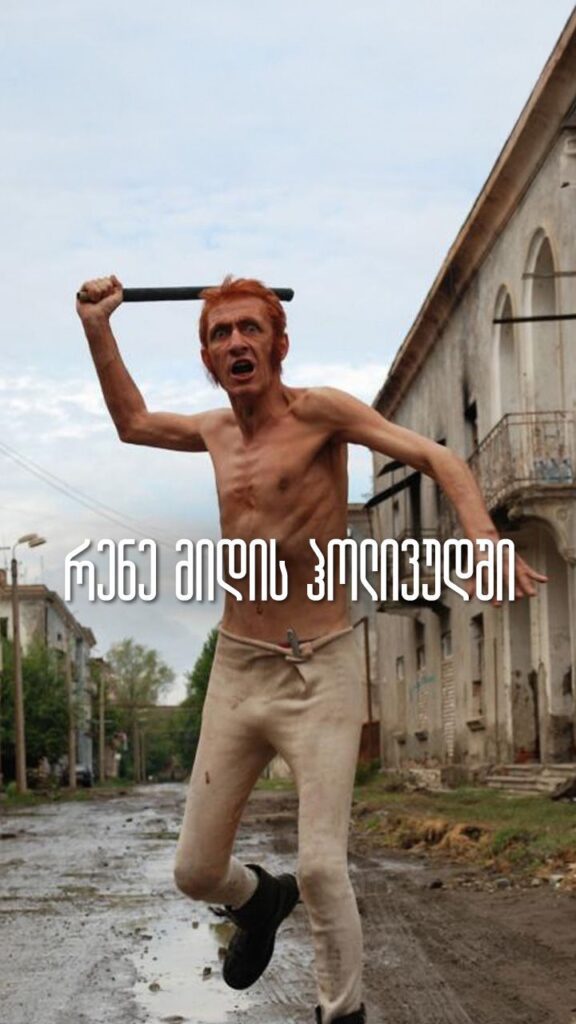
Partially relying on traditional elements and narratives characteristic of Georgian cinema (mostly in a social context), Aleko Tsabadze presents his heroes in plots characteristic of the aesthetics of European cinema and with “Hollywood-like” type conflicts, creating a truly unique style. The stories of non-mainstream, marginal people, whom he takes on tragicomic fateful adventures, have always been in the center of attention for him. At the same time, he looks into the deep layers of human psychology with his diverse portraits, encouraging us to be actively involved in his characters’ life challenges behind the screen and to think about a number of human problems at the same time. All this is most boldly and diversely manifested in the surrealist thriller “Rene Goes to Hollywood” (2010) of his films so far.
“How can I irritate my imagination so much that it could strengthen my fantasy?” – this is the question 37-year-old Rene Dadiani (Nika Tavadze) addresses to a psychologist (Leo Antadze). When he refuses to give a specific answer and is asked what his profession is, he meaningfully quotes the phrase that has become a leitmotif of Jerome Salinger’s cult work – I have to catch everybody if they start to go over the cliff - although this phrase is more sarcasm than a feeling dictated by sincere dignity, the descendant of the Dadiani family, a catcher in the rye field, appears to us as a good Samaritan at certain moments – especially in relation to the little orphaned red-haired boy, Ucha (Victor Barbakadze), who reminds us of a Charles Dickens’ character with his sparkling and curious eyes, dirty clothes, and mittens and a cap.
It is through such multicultural quotations that we immerse ourselves in the main character's three-dimensional adventure, which unfolds through the chronology of the past, present and parallel realities and also by irritating our imagination, takes us on a journey into an eclectic world, where the nobility of Ilia Chavchavadze's time is separated by just one wall from a dozen German fascists of the 20th century, while at the same time, the main character, dressed in a modern military uniform, has declared a twenty-year war with society and is fighting until society accepts him for who he is. At first glance, the poor Rene Dadiani lives in a fairly comfortable house (he has an Apple computer), has works by Rene Magritte hanging on the wall and, as befits his name-bearer, he himself leads a very surreal life: he is a video art teacher at a film school and, additionally, distributes gas cylinders and tries to strengthen his imagination, sometimes finding himself in one era, sometimes in another. All this straddles the line between reality and fantasy/daydreaming so much so that at certain moments you get confused about where the beginning and the end are. The main character also gets so involved in all this that he even starts using drugs.
The plot soon resembles a Hollywood crime thriller. While delivering a gas cylinder to one of the clients in Yahoos district, Rene gets into a physical confrontation with a red-haired client, Vatsa Lertsmiseli (Zura Begalishvili), when the latter accuses him of installing a defective balloon. Vatsa's step-son, Ucha, intervenes in the conflict, thus saving his stepfather from strangling, although only temporarily - Rene later returns to the Yahoos in search of revenge and even kills the red-haired Yahoo leader. He asks the murdered man to send regards to the devil but getting rid of him is not so easy – sly Ucha remains his ghost, who takes pity on him and practically adopts the boy - he carries him, pampers him as much as possible, tries to take him to the doctor, takes him shopping. Because of him, his blind friend Toma (Niko Gomelauri) also bothers us, who reminds us of Rene's inner voice with its calmness and wisdom. At the same time, alternative realities flash through his life like hallucinations, where he fights against society, meets Hitler, witnesses Ilia Chavchavadze’s murder investigated by law enforcement officers who arrive in modern police cars, etc. And, most importantly, he is not bothered by Yahoo and his gang (here, of course, we mean Jonathan Swift's Yahoos - rude, dirty and unpleasant creatures), who spoil the work at every turn. It is also interesting that the author gives such a person a kind of noble name and even creates a kind of oxymoron. Even the main character himself - a descendant of the Dadianis, is engaged in activities that are not very favorable for his family.
In short, as befits a true postmodernist work, the plot is full of quotations and references, a whirlwind of irony and oxymoron. These fractal stories, bound together like a Möbius strip and connected to each other by the smallest details, are presented in a mosaic, which, with a “Rashomon” effect, shows the multi-angle perspective of the same story. Everything is based on three basic elements: a diverse cast of actors, where each portrait is impressively unadorned and unique due to the visual concept (although, at certain moments, “theatricality” also sneaks up on the actors), Mindia Esadze’s cinematography, and, of course, Aleko Tsabadze’s directing and screenwriting skills.
Through parallel editing, several narratives develop and the cornerstone and starting point of all of them is Rene himself: we can see his ancestors, spiritual world, inner feelings, his psychological challenge with national identity, his relationship with the individual and society, etc. Rene Dadiani is several personalities who exist, function and “act” in different settings. He is somewhat similar to the main character of Leo Carax’s cult “Holly Motors” – Mr. Oscar, who has 9 different “meetings” scheduled in a limousine during the day. This can also be considered another virtue – Aleko Tsabadze “touches” many topics at once, which is quite risky for any dramaturgy, and in the case of this film, the result may not be called ideal but it can be freely classified in the (Georgian) “art-house” category to the extent that it is, in a good sense, a different work.
And in general, it is interesting why such a decision to play with eras – is this Rene’s subconscious, in which all types of thought and not thought accumulate and all this is a representation of his historical collective unconscious, both as a Georgian and as a world citizen? Then why does he appear to us as a hero and an anti-hero at the same time? Could this be a simple review, analysis, and even a re-enactment of past and present events in order to avoid mistakes already made and thus change the direction of history? But no – Ilia will be killed again, and the Yahoos will personally stand over him and say directly with the famous quote “Is there any nation happier than ours?”; there will again be betrayal, underestimation, confrontation between him and society, good and evil. Aleko Tsabadze does not like demagoguery, on the contrary – through Rene, he indirectly tells us to discipline our thinking and form our own opinions (and also gives us a little advice to people who love cinema, that if we want to create something of value, we must be ambitious…).
In the end, going to Hollywood does not happen literally, although we do witness an adventure similar to a Hollywood movie: we can see Vatsa in the final episode, killed by Rene and brought back to life in a bloodied shirt, who walks and sits next to Rene on the banks of the Mtkvari River, Rene shares a piece of bread with his enemy, who has safely returned from “hell” and together they feed ducks on the river. This is reconciliation, forgiveness and above all, coming to terms with one’s enemy, who is, to some extent, similar to him, his alter ego. After all, every coin has two sides; there is a Yahoo in every Dadiani, a little scoundrel in every noble, a little black in every white, and vice versa. How much we allow one side to embrace the other depends on us. Maybe being the guard in the rye field doesn't just mean being a watchdog for other children, it also means the child in our own heads.
Or perhaps we shouldn't take this film analysis so seriously. Maybe it's all just a game. Isn't the main virtue of postmodernism (self-)irony? Dadaist-surrealist poet Philippe Soupault said that there is nothing more surreal than life itself. So, it is not impossible that Aleko Tsabadze showed us reality.
Eter Parchukidze


