Tskaltubo balneological spa resort has been one of the most distinguished resorts for years with its diverse and unique sanatoriums and has treated many diseased people. These buildings lost their original function after the Abkhazian war and became a shelter for war-torn, suffering and sad displaced people. Although they could no longer fulfill their original, healing function, a good deed once again took up residence within their walls. These monumental, already mystical buildings served many displaced people for almost 30 years.
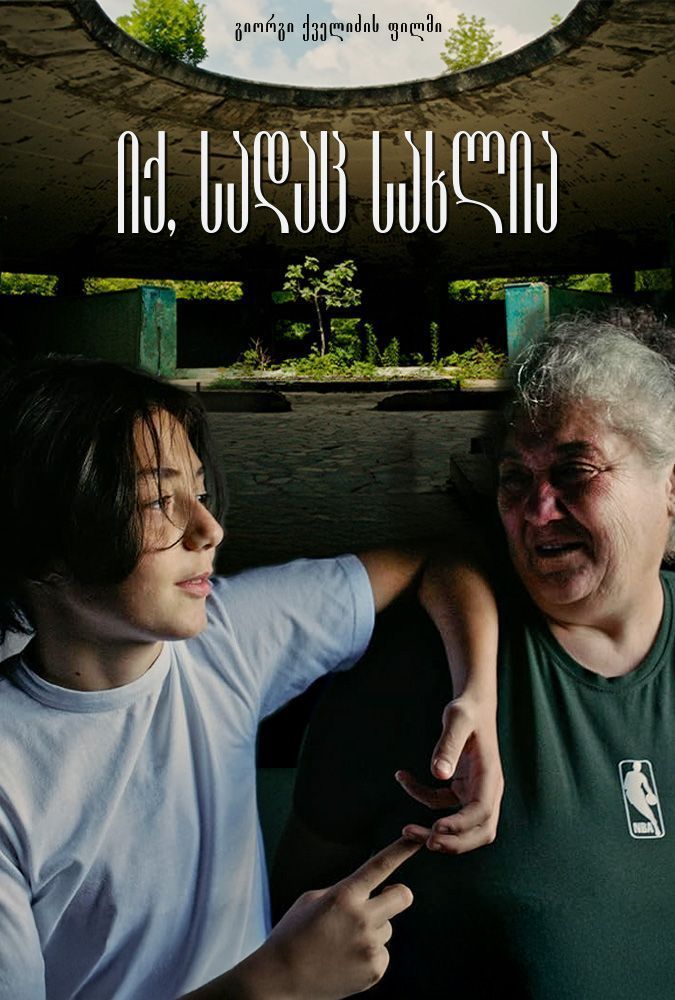
Director Giorgi Kvelidze’s documentary film, “On the Way Home” (2024), tells two sad stories. One deals with the topic of the displaced of the Abkhazian war and the other depicts the sanatoriums in Tskaltubo that have remained inactive. Both stories are closely connected. Despite the fact that the displaced people live in rather difficult conditions (the walls of the sanatorium are soaked with damp, water drips from the ceiling here and there and the walls of these huge buildings probably freeze in winter like ice), they are still united by mutual support and a common pain and they have been encouraging each other with this unity for years, looking at life with humor and hope despite the fact that they have lost a lot.
The director connected two generations to the painful topic of Abkhazia – the first, who witnessed all this and the other, a new generation, who was born after the war. 12-year-old Nikusha, who was not personally affected by this war, is affected by the remnants of the past in the present because he was born in Tskaltubo and grew up within the walls of the sanatorium "Aia," where the displaced people settled long ago and still continue their lives with those unhealed wounds, remembering their homeland, the happy years that were destroyed with one blow by the cruel hand of war. Therefore, Nikusha is also a part of this great pain, growing up with his grandmother in a small room of the sanatorium, while his mother, whom he misses so much, has been working abroad for years. The consequences of the war that began in the past still live with him. His grandmother, Khatuna was waiting for the apartment promised by the state years ago. Now he is looking forward to it with her. Unlike his grandmother, Nikusha has never had his own house, yard, city or tree that bore fruit in his garden and made him happy but he will never forget that abandoned, dilapidated, once well-groomed, huge building where he first set foot and will remember it as a sweet, sometimes sad memory that he and his peers breathed life, revived, and turned into a cozy haven of goodness.
Even though the Abkhazian war swept over like a tsunami the displaced people and brought great pain and suffering to their lives, they try to find solace in the hope of the future and their future is the generation they are raising.
The other main character of the film is 81-year-old Iamze Giorgadze, who has also been sheltering in the abandoned sanatorium "Medea" for 30 years. Like the other displaced people, she is waiting for the moment when she will receive the house promised by the state. All she can do is to endure as long as possible and it is this endurance of patience that gives him the strength and determination to look to the future with hope. She spends her days in this waiting and thinking and the images of the fire-breathing bullets of war sometimes flash like a thunderbolt before her eyes. In parallel with Iamze’s narration, the director shows in the shot horrible scenes from the chronicles of the Abkhaz war – how the displaced people struggled to cross the Sakeni-Chuberi mountain pass and how they periodically encountered the dead on the way.
Iamze also recalls with nostalgic intonation her youth, the collective farm, how she picked tea leaves and how happy she was then. It is not surprising that the memory of the collective farm and the Soviet Union makes her smile happily because those were the happiest years of her life – she had a beloved husband, a son who she lost in the war. Now she has to endure with the crumbling walls of the sanatorium until the sun shines in her life again, warming Iamze’s heart with hope and joy. Everyone has moments of their happy past that they never forget and if someone or something took those moments and seconds away from you and never gave them back, you will definitely spend your life thinking about them until a new joy outweighs them. Iamze's joy is there, where there is a home, and she will probably have that "home" soon "there" again.
The old, ruined, beautiful, lifeless neoclassical architecture of the Tskaltubo balneological spa sanatoriums warmly "tells" the story of its residents. It hurts, suffers, and rejoices with them. Its walls are a confidant of the past and the present, captivating you with their monumental columns, details and ornaments of Roman and Greek culture, Corinthian orders, the cameraman captures each detail of the architecture of the sanatoriums, the beautiful cornices with respect, awed by its grandeur. It seems that one can feel his admiration behind the scenes as well as heartbreak that such creations are being destroyed so mercilessly.
At the bottom of the empty pool, colorful mosaic fish are lost in the “waves” of plants growing around it instead of water, while beautiful ornamental arches cover the faded colorful walls here and there like a waterfall. Time and neglect have taken their toll, however, the remains of the buildings still retain their striking beauty. Old, drooping palm trees dispersedly, plants growing between the strictly standing columns, the chirping of birds and the bustle of the residents give a touch of life to the deserted gardens of the sanatorium and the walls being peeled from rain and damp.
Into one film, the director combined these two painful topics – the fate of the displaced from Abkhazia and the fate of the once vibrant, unique but now neglected balneological spa sanatoriums that served as a shelter for the the displaced people. By showing footage of the Abkhaz war and the once vibrant sanatorium, the director emphasizes the brutal consequences of war, which can take away everything that once bloomed and flourished. People lost everything they had worked and struggled for years in one day.
Old documentary shots remind us how dazzling the halls of the sanatorium were at that time, where life was in full swing. The stage, where concerts were once held and created a positive mood for holiday-makers who came for treatment, is now empty and “silent.” Static, frozen-in-photographed shots are replaced by documentary footage from the last century. With double exposure, the director draws a parallel between the pre-war and post-war orphaned buildings that were symbols of health but now their moldy, damp walls are stained with the colors of illness, war, and hunger. And despite everything, they still continue to exist, and moreover, exist in a different role, as havens for the needy and displaced. The walls in which they have been living for years have been warmed and thawed by love for each other, a love that is warmer and more curable than any healing water.
These two generations shown in the film – war veterans and their cheerful offspring – create a different atmosphere in the cold walls of the sanatorium. The former look at the future with pain and sorrowful eyes and create a melancholic tone, while the latter, children full of life, ignite a spark of the future in it and do not lose hope that one day, very soon, they too will have their own home.
When you really, really want it to happen, it will definitely happen. And so it happens in the case of our heroes. Their dreams, after a long wait, come true. The Ministry of Labor, Health and Social Protection of IDPs from the Occupied Territories of Georgia resettles them in new apartments designated for them., ძალიან გულით გინდა რომ მოხდეს, ის აუცილებლად მოხდება. ჰოდა ჩვენი გმირების შემთხვევაშიც ასე ხდება. მათი ოცნებები, ხანგრძლივი თმენის შემდეგ სრულდება. საქართველოს ოკუპირებული ტერიტორიებიდან დევნილთა, შრომის, ჯანმრთელობისა და სოციალური დაცვის სამინისტრო მათ ახალ, მათთვის განკუთვნილ ბინებში ასახლებს.
The old is replaced by the new. Life in clean, long-awaited renovated apartments begins and they again adapt to a foreign environment. The director combines the sad story of the past and the present with sincere heartache. At a glance, the long-awaited wishes of 30 years seem to be coming true, the displaced people now have their own roof, but the sadness still does not disappear, the sadness that will forever remain in the consciousness, dreams and memories of the older generation who have survived the war, and where their real home is, modern, neat and clean walls can never replace it.
Many displaced persons still wait with great patience for their turn to move from the silent, austere walls of the sanatorium to a new apartment that will bear their name and those buildings seem to nod in response, sympathize with them and share their dreams in return, wondering when their walls will be adorned again, when the carved railings of the grand staircase will breathe new life, and when the fountains of “warm waters” bursting from their “hearts” will once again murmur to the delight of countless people.
Ketevan Ghonghadze