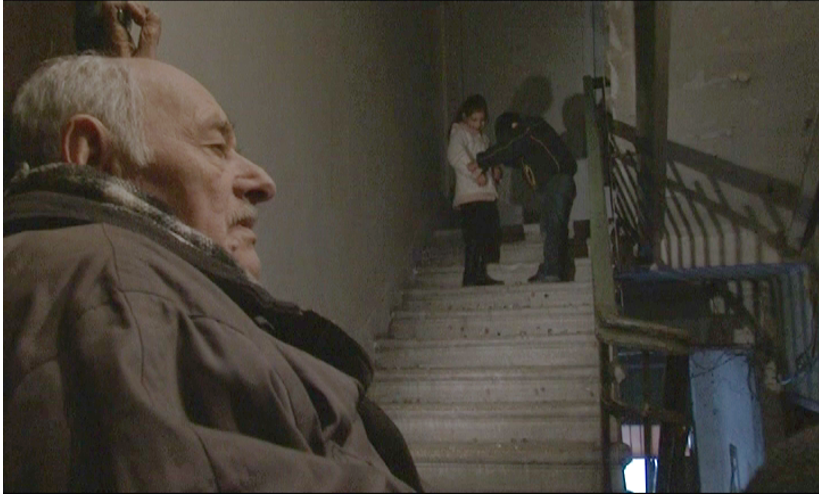
Poverty is a terrible thing, it penetrates straight into your soul and deprives you of your humanity with such slow agony that you no longer recognize yourself. You don’t know why you step out of a warm room into a frozen city. The gloomy days that have turned into a sad routine become so acceptable that you forget what a good life is. People walking here and there on the tired streets of Tbilisi sometimes don’t even listen, they just pass by the extended hand of help with great regret. Everyone is in a hurry going somewhere, everyone is running somewhere, and no one has time for a trembling, wrinkled hand.
Kote Takaishvili’s student film, “Happy Meal” (2010), shows the daily anxiety of a poor family within the framework of systemic poverty. This film tells the story of the Tbilisian working class, in which people simply exist but do not live.
The director creates a social reality in the very first shot - a woman's sad face appears against the background of the annoying sound of a subway train. At the same time, the child brings his father a 6-GEL meal from a "newly opened building," for which they do not have money. The mother returns from work with a wiped-out face. The father is in a routine friendship with the kitchen chair (he does not have a job). They put money together to make ends meet every month. The characters’ daily suffer emphasizes the ruthlessness of poverty.
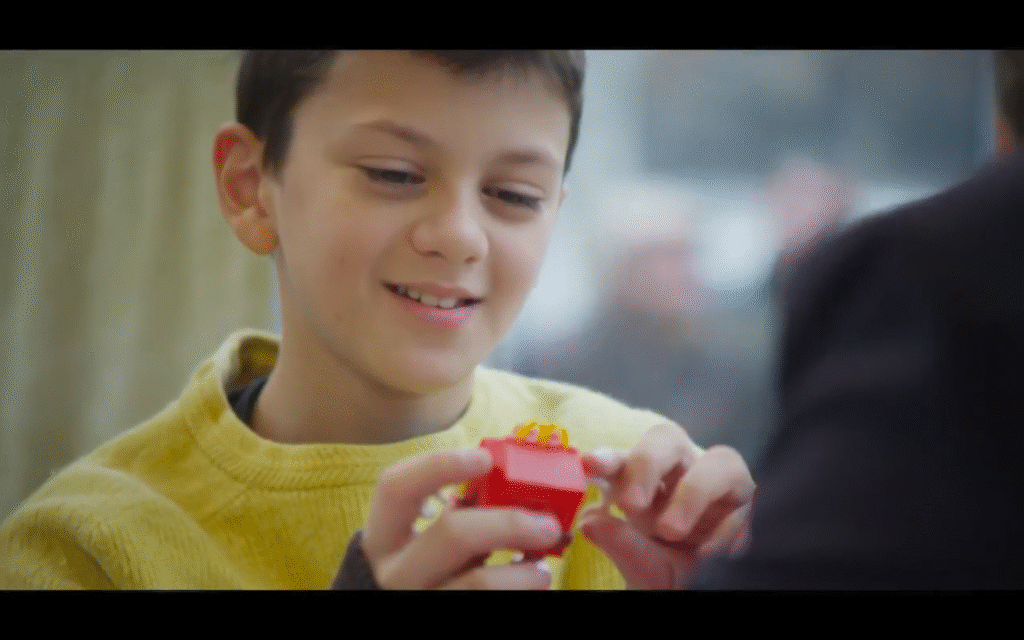
The film director well presents the phenomenon of a child in this circle of poverty. Children are innocent. They simply dream. Such insignificant things are valuable for them, which may not even be worth the attention of an adult. They do not understand the price of daily hardship, and perhaps that is how it should be. In any case, when the son, Reziko wishes for the Happy Meal at the new McDonald's building, the father fulfills this wish with the money set aside for errands. In this universal chaos of poverty, one must try as much as possible to leave innocence intact. Against the backdrop of the parents' constant suffering, the director leaves the child "clean." He fulfills his dream. In this way, he declares that what happens around the children is not their fault. The short scene of ordering food, where the whole story of poverty is hidden behind this child's happy face, is more intimate and profound than any other emotional attempt in this film.
Given this heavy subject matter, it is easy for the viewer to become a victim of the director’s emotional manipulation in the film’s climactic scene. The father takes the money he has saved up for his hardships, takes his son to McDonald’s, and bumps into his wife on the way out, who turns out to be begging for money for the family. With this final scene, the director tries to completely shift the focus from the brutal daily existence to the shame of “begging.” It turns out that the mother’s character was lying about her job, and the husband “embarrassed” turns his back on her and walks away in the last scene. The director seems to betray the narrative he has chosen throughout the film – the daily complexity of unemployment and hardship, a commentary on the social situation in modern Georgia, completely out of nowhere turns into the shame of poverty.
Georgian arrogant pride, which characterizes people of any social circle and is strange to everyone, still does not allow us to justify the characters coming to such decisions. Although the number of needy beggars on the streets with downcast, embarrassed eyes has increased greatly, and sometimes this stems from the arrogant attitude of society, this is not visible in the film. It is impossible to analyze this topic in such a short drama. Accordingly, its presentation is unjustified only for the purpose of emotional control over the viewer.
Despite several directorial and technical decisions, the pop-electronic and Louis Armstrong music used in two sections, which betrays the tone of the film, is a very realistic attempt to convey Georgian reality.
“Happy Meal” thematically describes the reality that is characteristic of modern Georgia, but is ignored by people. It is often said that we should stop raising social issues, that people are tired of heavy topics and it is time to make happy romantic films that create false ideas about reality. Such films do more harm than the momentary comfort of watching them. Films about so-called “suffering” people are not always justified but an attempt at sincerity creates an idyll of a sense of truth.
It is difficult to look at a film by a novice director with a critical eye. There is a high chance that the overload of this film with topics and inappropriate music is caused only by inexperience. Otherwise, Konstantine Takaishvili shows with excessive severity and moderate humanity the hardships of one family – the white days of unemployment and poverty and the generation raised in them, whose childhood is preserved only by the sincere daily sacrifice of their parents.
Poverty in cinema is more than a social background. It is a narrative force that exposes structural injustice and human resilience. By bringing the lives of the oppressed class to the foreground, cinema invites the viewer to confront an unpleasant reality and empathize with it despite their own experiences. In this way, the representation of poverty becomes essential to the filmmaker’s ability to criticize society and inspire meaningful reflection. Sometimes the effort is more valuable than the result. Sometimes the truth of such a film is more expressive than the empty farce of a thousand forgettable escapist films.
Giorgi Bajelidze