Any documentary or feature film shows a clear incompatibility between individual potential and social reality when it presents the figure of a little boy, a child who grows up in rural poverty and hardship but has a big, unfulfilled dream in his heart. Many young people face this dilemma. Here, aspirations, dreams, and goals confront limited financial and material resources. This social problem is global and shows inequality of opportunities, where the place of birth and economic status decide a person’s future.
The main problem lies in the lack of mobility within society in such cases. A person’s dream (be it science, art, or any other aspiration) requires appropriate resources: quality education, technological accessibility and proximity to development centers. Living in poverty itself implies a lack of these fundamental resources. The economic situation of the family often forces the teenager to join the family work process at an early age, which deprives him of time-the most important resource for learning and self-development. Poverty is even more vicious since it is hereditary. The family often does not have the opportunity to create the necessary conditions for a better future for its child. Villages and especially high-mountainous, remote villages are deprived of the modern education and infrastructure centers that are needed like air to realize a dream, therefore, geographical as well as financial situation is a clear dividing barrier between dreams and reality. The constant feeling of hopelessness and the understanding that your dream is unattainable leads to the psychological suppression of potential. The teenager has to grow up prematurely and realize that his personal value and talents are secondary compared to the difficult circumstances surrounding him.
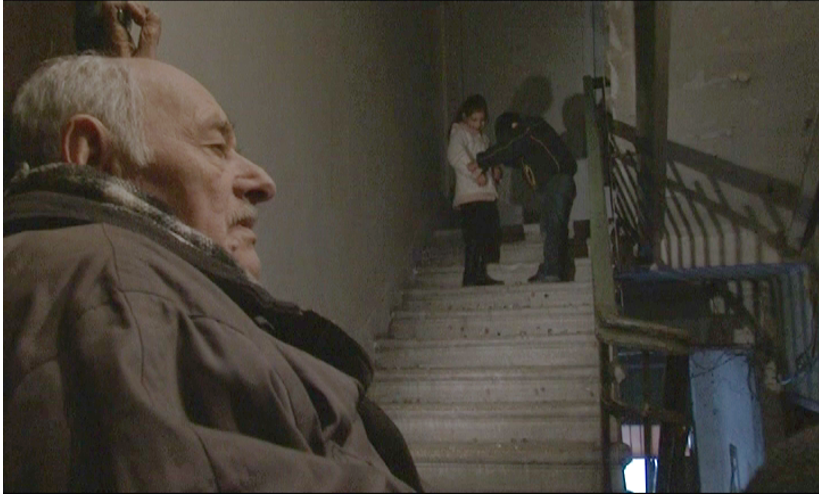
Bakar Cherkezishvili’s student documentary, “Apollo Javakheti” (2017) deals with this very sensitive topic. The main character of the film is a 16-year-old Bandura, whose dream is to go to America and become an astronaut but in one of the high-mountainous villages of Javakheti, amidst the grazing sheep and cows (which Bandura takes care alone), this dream becomes impossible and unattainable day by day, but in contrast, the dream becomes sharper and more intense for Bandura over time.
This cinematic portrait shows how individual aspirations and childhood dreams confront the harsh socio-economic reality. Bandura, who lives in a poor village in Javakheti but is full of aspirations, reveals the grave dilemma that many young people face today. Poverty and hardship force him to engage in work that is useful to the family at an early age, which cannot include realizing dreams and striving for personal goals.
This story is not only about a little dreamer living in Javakheti. The film is a mirror which reflects the state's lack of responsibility to ensure equal opportunities as well as a message to the society, which cannot ensure the realization of talented children’s potential. The film proves that unfulfilled dreams, which die forever due to poverty, are not only the loss and unfulfilled dream of each individual but also the nation’s development.
Making a name for themselves and establishing themselves is often as unthinkable and impossible for novice directors in modern art, so is as becoming an astronaut for Bandura. It is possible that the director painted a portrait of himself in this character.
Technically, the film is well-made and composed. The subjective camera is outstanding during the construction and playing of Bandura’s dream ship. This makes us feel even more the intensity of the character’s dream. There are almost no dialogues, which probably indicates that Bandura is unacceptable and excluded even by the village society. Natia Maghlakelidze’s music also deserves mention. In general, music is always one of the most important elements in the film, which further confirms and strengthens the atmosphere, emotional background and main message.
The narrative focuses on a little boy and his unfulfilled dream. From a philosophical point of view, this situation poses the viewer with a question about the fundamental justice of human potential. If talent and determination are equally distributed in society but their realization depends on economic conditions and geographical location, then society cannot provide equal initial conditions. Killing a child’s dream may also be a loss to society, measured not in terms of finances but in terms of lost innovations, cultural contributions and development opportunities.
“Apollo Javakheti” can also be seen as a message or a call, which implies not only economic assistance but also targeted educational and infrastructural investments in the regions, so that children there and children in the city have an equal starting point.
Tinatin Asatiani