
The Georgian cinema of the 1960s, the films of Tengiz Abuladze, Otar Ioseliani or Eldar Shengelaia, were full of humanity, irony and poetry. Modern Georgian cinema often revolves around the same topic especially in recent decades, constantly returning to emptiness and hopelessness. In the films of that time, the heroes also made mistakes, but in the films’ narrative there was always light and faith that goodness still exists somewhere. Today, a new generation of directors is no longer looking for light in films. They try to show reality as it is: uncompromising, sometimes harsh, often unfair. Georgian cinema seems to have lost its ability to imagine and has chosen to tell naked facts.
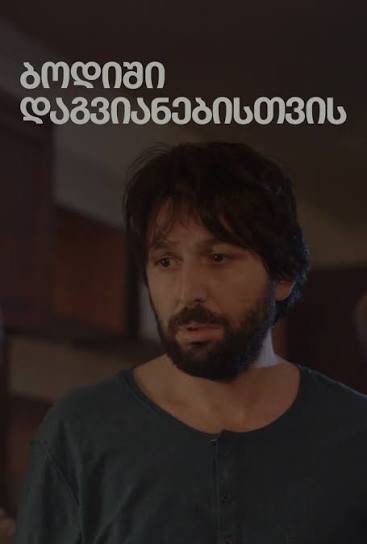
Luka Beradze’s short film “Sorry for Being Late” (2021) is a continuation of such a modern narrative. It is based on a true story, but at the same time, it goes beyond the description of a specific case. This film tells a story that really happened in 2019 - an ambulance arrived late at an apartment, where they found an elderly woman already dead. The shocked relatives, overcome with anger and a sense of injustice, attacked the doctors. In this scene, there is not only anger towards a specific service, it is an explosion of the long-standing silence that is often felt in Georgian society.
The director does not tell this story as a journalistic chronicle. He transforms it into a metaphor that accurately expresses the moral and social state of modern Georgia. The film, which begins with an ordinary everyday episode, soon turns into a heavy social drama.
This film speaks about the topic of responsibility. Here, responsibility is shown in a much broader context - it is a person’s obligation to remain human, even when the system and environment do everything to make this impossible. The doctors' delay seems to be a technical problem, but the director presents it with a moral meaning. This delay becomes a metaphor - a delay in the face of responsibility, compassion and humanity.
Beradze does not choose sides. He neither justifies the doctors nor blames the relatives. He simply shows the emptiness that exists between these two sides. There is not a single hero in the film who is completely right. The doctors try to do their job, but systemic weakness makes them victims of bureaucracy, and the relatives, despite their pain, react with aggression and violate the boundaries of humanity. The film says: the problem lies neither in the individual nor in the system, the problem is in the whole It is in a society that has disintegrated to the point where responsibility and compassion no longer exist.
The camera is often static, the movement is slow, the sounds are sharply defined, especially the background noise of the city. The cameraman creates a visual language that absolutely resonates with the film's narrative. The camera is mostly hand-held, moving slightly, as if to accompany the characters’ movement. Most of the shots are made indoors, which creates a feeling of extreme confinement. The viewer cannot leave this room, cannot go out into the street, cannot breathe, just as the characters cannot find a way out. The cameraman does not try to take beautiful shots and this is precisely how he achieves reality. The shots seem to be taken randomly, but in fact they are very thoughtful. The camera often stops on faces, on the silence of the room, on unclear gestures. This form gives the film a realistic intensity, although the cameraman's precision cannot change the overall dynamics. The rhythm of the film is monotonous, and in some scenes it is overly drawn out, which makes it difficult for the viewer to be emotionally engaged. The camera sometimes seems confused, not knowing where to stop and what to leave out of the shot.
The colors of the film are also minimalist: white and gray dominate, which creates a cold atmosphere. The colors here are not only for the atmosphere, but also appear as a metaphor for moral and social coldness.
The merit of the film is the relevance of the topic, which may be painful for many Georgian viewers. Beradze chose a story that is familiar to everyone, but rarely becomes the subject of cinematic discussion. Additionally, presenting the film as a short film is a good decision. At first glance, it seems like a small episode, but it says much more about modern Georgia than many full-length films. The dialogues are kept to a minimum, although the tension is felt in each economically expressed phrase. When a relative says: “Where have you been for so long?” – This is not just a question to the doctors, it is a protest against the entire system.
Luka Beradze’s “Sorry for Being Late” echoes Cristi Puiu’s “The Death of Mr. Lazarescu” (2005) – a film that completely defined the tone of the “Romanian New Wave” with its dramatic realism and chronicle of a patient’s absurdly long death. The fates of Lazarescu and Beradze’s old human beings unfold according to the same scenario. The state system, which should be an instrument of human survival, itself becomes the cause of death.
In “The Death of Mr. Lazarescu,” an old man falls ill and the ambulance spends the whole night in Bucharest hospitals. The doctors are usually indifferent, dissatisfied and exhausted. In the end, the patient dies, and death becomes not a tragedy, but a routine.
The script of Beradze’s film is almost symbolically devoid of movement. Here, the patient is already dead. The Georgian director did not need to blaze a trail, the path had already been traveled. Puiu shows the process, Beradze the result. Both films ask the same question: what happens when death becomes a normal occurrence? When human pain no longer causes tears or regret, then only forgiveness remains. However, unlike Puiu's film, where the action is more dynamic, the director is not afraid to clearly state his opinion. The form and visual language of Beradze's film, on the other hand, are imbued with a different aesthetic - silence, motionlessness, natural lighting, psychological coldness. In itself, this can be interesting, but when such a tendency becomes the main language, the cinema loses its diversity. The compositionally sound, but spiritually empty form accurately reflects the crisis in which modern Georgian cinema is. Technically flawless, but humanly alienated.
The actors' play is sometimes too distant. In the roles of doctors, the actors well portray professional coldness - they have already seen death so many times that they have lost the ability to empathize. In the reactions of relatives, one can feel real, unprepared emotion, which creates the impression that some of them are real people, not actors.
In some scenes, this naturalism turns into monotony. The dialogues are often meaningless, sometimes the naturalness of the text is lost and it turns the script artificial. Here one of the serious problems is revealed - some of the actors themselves seem not to be completely sure of their own emotions. As a result, the film loses the energy that is necessary to convey a real tragedy.
The dialogues seem repetitive, they fail to reach the psychological depth of the tragedy. The director wants the audience to immerse themselves directly in the sound of reality.
There are chaotic sounds, roars, cries, the distant sound of the city. This sound minimalism works to some extent, although at times the film reaches complete silence, thereby weakening the emotional effect.
„ბოდიში დაგვიანებისთვის“ არის მეტაფორა ქართული საზოგადოების მდგომარეობაზე, სადაც ყველა რაღაცას აგვიანებს – რეაგირებას, თანაგრძნობას, სიყვარულს, ადამიანურ სიტყვას. ფილმი არ აიძულებს მაყურებელს, ეძებოს დამნაშავე, არამედ აფიქრებს, რა მოუვიდა მას, როგორც საზოგადოებას, როცა სიკვდილიც კი აღარ აშფოთებს, რადგან უკვე მიეჩვია ამას.
Today's films, including Beradze's film, are often limited to describing a social problem. Directors seem to be trying to get to festivals, and not to convey their inner message, which is why modern Georgian cinema has turned into an aesthetically cold, emotionally exhausted and plot-repeated space, where the description of reality has become an end in itself.
“Sorry for Being Late” is just part of this trend – a technically sound, but emotionally colorless film that fails to reach the human heights where Georgian cinema once stood. In the 1960s, a hero was a simple person who fought for honor. Now there are no heroes, only powerless, confused people who can neither express anger nor love.
Teona Vekua


