A grandmother is the warmest memory in a person's life. A voice that comes from the past and comforts the future. A person who has known you longer than you have known this world. It is interesting that each grandmother had her own story, each lived their lives differently and became a sweet memory in the end. It is this path that makes a person who they are.
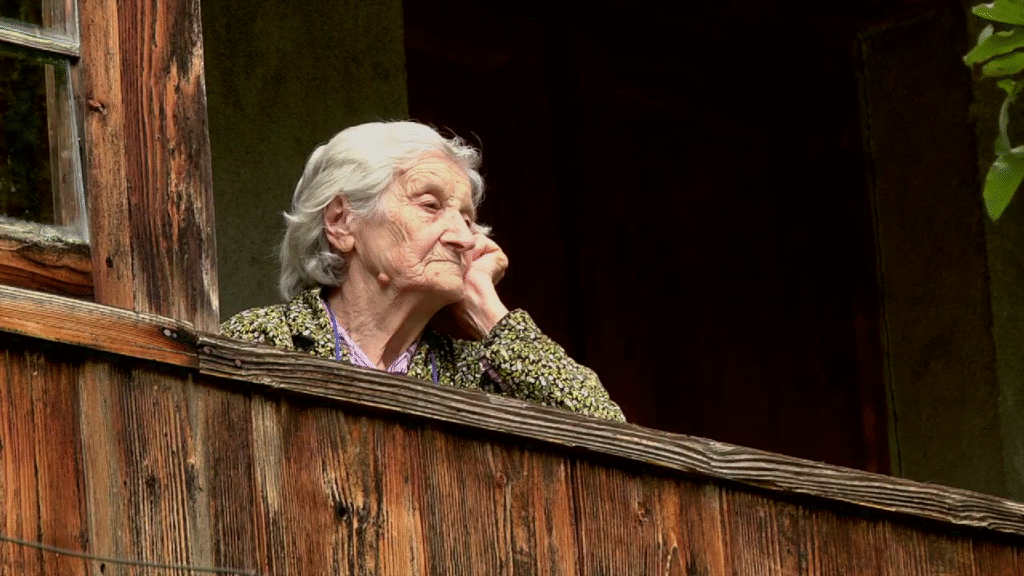
In the village of Utsera in Racha region, there is a house with a beautiful yard. A grandmother, a warm, loving and painful adventurer lives here. It is about this woman that Giorgi Khuchua's student film "Clavdia" (2015) depicts. It begins with shots of the village - Racha, mountains, nature, the village center, everything is shown simply, clearly and pleasantly. Soon we can see how the grandmother sees off her daughter and grandchildren to the gate and is left alone. This is where the story begins. The rest of the film, actually, shows the routine, what this woman does alone, how she takes care of the yard, the house and even the guest if he comes and she does it quietly, unperturbed. Watching these documentary shots is quite pleasant, the viewer does not get the impression that he is watching something different. Conversely, it seems he has seen this picture a thousand times in real life, when visiting any village house. In fact, the director is not trying to say anything new, nor is he offering the viewer a plot full of surprises but what is special here might be the fact that this does not bother you. On the contrary, you like watching beautiful landscapes, listening to a small dialogue between Clavdia and the neighbor woman and your heart is warmed by the spectacle that they offer you.
Suddenly, the film presents the audience with old photos, footage out of nowhere, pictures of Lenin and Stalin appear, which people carry on the streets, and the film seems to be no longer what it was before. Clavdia begins to tell the story in Russian. In front of the audience, the elderly woman seems to become a little girl at first and then a young woman in love. The scene leaves a feeling of this, especially because it is a real story and the person telling it is a real participant, not an actress. Clavdia once lived in Belarus with her family but the war took everything away. There are many shots of her, whether from the war or from exile. This is an attempted and tested but clever method for the film, which has gained more credibility and the necessary depth for perception. Clavdia describes but avoids details, what exactly happened to her mother and father. She is an adult but it seems that she is going back. As soon as she remembers this story, she is still an orphan girl and this is very clearly visible. Fortunately, every story has its good part. She fell in love. Here the director is already uses Clavdia's husband, Shalva’s shots, so that the audience can better understand the story. As it turned out, Shalva was the very person for whom Clavdia moved to Georgia and settled down.
It is strange how a person can tell their entire life in such a short time. This seemed to be a bold move on the part of the director. He tried to reinforce the illusion that life passes like a minute, and to be honest, he succeeded. Maybe not in detail, but he still reviewed one person’s adventure and depicted it in a short film in a very pleasant and understandable way. It's one thing to know that you are taking a simple topic for a film and another thing to make this film work.
Even though each step that the director took during the filming was very primitive from beginning to end, the result is still satisfactory. It leaves exactly the feeling that was intended and you don't think that something was attempted and failed. It should have been sad, pleasant, soul-searching, and it turned out so. The film is exactly what a grandmother herself should be. A woman whose life is filmed for a day is as special as all other grandmothers’ lives. It turned out how loving she is for a moment but at least she took the time to do it. Her image stood out as a mother, grandmother, neighbor, wife or child. Perhaps for a short time but everything came together and turned out to be pleasant.
Many people love to hear people's stories, especially those of the elderly. It seems that the past, which is written about in books or seen in films, is clearly presented face to face. There is someone who was there, felt it and went through what one can only imagine. At such a moment, the world seems more diverse. It is one thing to know that many orphans lost their mothers and fathers during the war – some were deported, some were imprisoned but it is different to hear it from the person who has experienced it. The fact that the film is a documentary brings the viewer much closer to Clavdia, takes her back to where her story begins and leads her to the end. She seems to be telling it to the viewer personally, not to the camera. It is not known whether this result is ultimately the director’s or the story’s merit but if you don’t think about the flaws that characterize every film while watching it, everything is already clear and it is this clarity that you must observe.
Anna Maria Dardagani