
Indifference is a crime but everything that follow it is a punishment. People fight against someone or something and when they fail at least several times, they begin to surrender. They adapt to the life they live in continuing to exist with feigned happiness. The reason for everything and the main problem is the state of man’s adaptation. He can adapt to everything, be satisfied with even a little, but not be defeated any more.
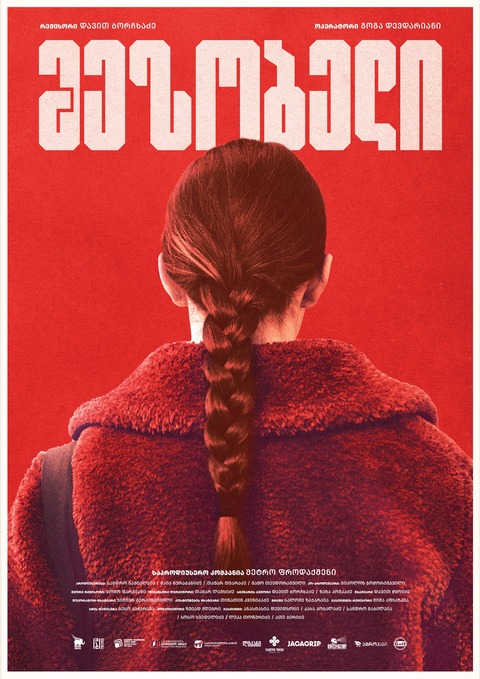
"The world is a dangerous place to live not because of those who do evil, but because of those who look on and do nothing, wrote Albert Einstein. Davit Borchkhadze's film, "Neighbor" (2021) follows a similar plot line. The story is about a family with a father and three children. One of them is the little one Ika. This boy disappears one day. At first, his sister seems to do everything she can to find him. She thinks that her brother has been kidnapped by the neighbor's workers and is even going to call the police but this initial panic soon subsides and no member of the family does anything to find Ika. The father is not interested in his son or how the workers have limited their already small house. Zuka is not sad about life either. He rarely leaves his room. Everyone adapts to everything. The workers feel at home in this house as if it were their own. The key word that accompanies the film is - "it's okay." It's okay if a boy gets lost, it's okay if a worker can take food out of someone else's refrigerator with dirty hands and watch TV without a care. It's also not a problem if three out of four family members stay at home. Everyone adapts to everything.
The word “it’s okay” seems to become a symbol of the whole story. It expresses the state when a person sees a problem but doesn’t try to act. It seems like everything is going badly, but they still say – it’s okay. It is this attitude that creates an environment where injustice easily occurs. When a person doesn’t speak up, others are given even more right to invade their space and violate their rights.
“It’s okay” seems like a simple reassurance but in reality it can be the biggest crime. It seems to justify what is clearly a problem. It is a word that accustoms people to silence and adjustment. You could say that “it’s okay” belongs to the category of words that should not exist at all because the acceptance of injustice often begins with it. It is even worse to say this word when what you see is an obvious problem. At the very first resistance, people should not bow their heads and continue on their way as if nothing has happened. It is precisely this attitude that gives the problem the opportunity to grow and eventually lead to much more serious consequences.
The film is not about how people live in their homes or what they eat. The main thing is that whoever you allow will do what you want. If you don't respond to a person's yelling, they will yell at you even more and then baff on the head if they want to, or they will sell your house without asking and make you live on the streets; or they will eat so much food that you will go hungry. Life is not like turning the other cheek. It is not necessary to turn the other cheek when you are hit on one cheek. The solution is to speak up and defend yourself. Failure is not dangerous either. With all this, the director wanted to show how far a person's indifference can lead.
The atmosphere of the film is calm and seemingly ordinary but it is precisely in this calmness that the characters' passivity and adaptation are visible. The calmness of the shots, the everyday environment, and the scarcity of actions further exacerbate the feeling that the characters are watching their lives from the sidelines and trying to change nothing. The director seems to be deliberately showing the audience ordinary and unremarkable scenes, but it is precisely in this mediocrity that the problem is revealed - people adapt to everything and eventually even lose control over their own lives.
The film also makes the audience think about another important issue - how often we adapt to what we really shouldn't accept. Sometimes a person gets so used to a difficult or unfair environment that he can no longer resist. It is this adaptation that becomes the biggest problem. A person gradually loses the desire to fight and eventually ends up in a state where he no longer tries to change his life.
The characters in this story seem to be different from each other but they all have one thing in common in the end - indifference. Neither the father or children, nor other people try to really change what is happening around them. They simply adapt to the situation and thereby allow the problem to grow even more.
“Neighbor” is not just the story of one family. This is a film about the human condition, about how indifference and silence can slowly destroy both a person and the environment in which he lives. The director shows the audience that the greatest danger is often not only in evil but in the silence that allows evil to exist.
However, it is precisely this endless silence and inaction which is the director's main message and sometimes works against the film. The shots are so stretched and monotonous that the viewer's emotion slowly fades. When nothing changes on the screen for a long time, the main message is also lost in this monotony, which is so painful. Sometimes you get the feeling that the story has dragged on too long and that the initial intensity that you had at the beginning has disappeared somewhere in this endless expectation.
The characters are also sometimes so indifferent that it is difficult to believe in their existence. It is difficult to imagine a person who has no desire to defend himself at all when his house is being intruded so rudely. This excessive "numbing" does not make the characters appear as living people - they are more like some ideas than real people who should be sympathized with. In the end, the film resembles more of a social experiment than a true life story.
In some moments, the main message of the film seems too direct. The plot and the characters’ behavior are constructed in such a way that the viewer almost immediately understands what the director has to say. Because of this, the film leaves less room for interpretation. When the idea is conveyed too clearly, the story seems less natural and more like a deliberately created example, so sometimes you get the feeling that the film is trying to emphasize the message more than to show real life.
The biggest problem of society is often not that it does not notice injustice. Conversely, it often sees very well what is happening around it but still does not take action. It seems it expects everything to be resolved by itself or someone else will solve the problem. It is in this expectation that time passes and the situation becomes even more difficult. In the end, a person adapts to a reality that was completely unacceptable at first.
This is exactly the process that the film shows - how a person can slowly lose their ability to resist. When a person gives in once, it becomes easier to give in a second time, then a third time. And eventually it becomes a habit. In such an environment, the problem does not stop, but rather grows and spreads, which is why the most important first step is when a person decides that they will not simply accept injustice.
"Neighbor" reminds us that when a person sees injustice and does nothing, they become part of the problem. Thus, the main solution is to speak up, stand up for themselves and realize that silence is often the most dangerous option.
Barbare Kalaijishvili


