Each of us becomes a victim of great injustice at least once in our lives, which can be caused by any impulse, and it is at this time that we cross the hair bridge, which we either overcome or cannot overcome. Human morality and humanity are revealed precisely in dealing with this injustice - you either survive or not, or you are overcome by a thirst for revenge, or, again and again, you fail.
It is definitely very hard to cope with such human difficulties and even harder to maintain yourself when someone unjustifiably touches your honor, and since a person is unlikely to find a remote coincidence between the irrational and the rational at that moment, the universe often sends him a “guardian angel,”, who sometimes appears in the form of a familiar person, sometimes a stranger. It often happens that man is the enemy of man, and "happy end" cannot exist everywhere, of course, but they do happen and it is important to see this.
Irakli Belkania’s student film “Fish” (2023) tells the story of a period in the life of an ordinary student, Gabo, in which he finds himself in a similar difficulty as mentioned above. The film not only introduces us to the boy and his surroundings, but also indirectly tries to show the social situation of young people and, accordingly, makes the main character the embodiment of all this.
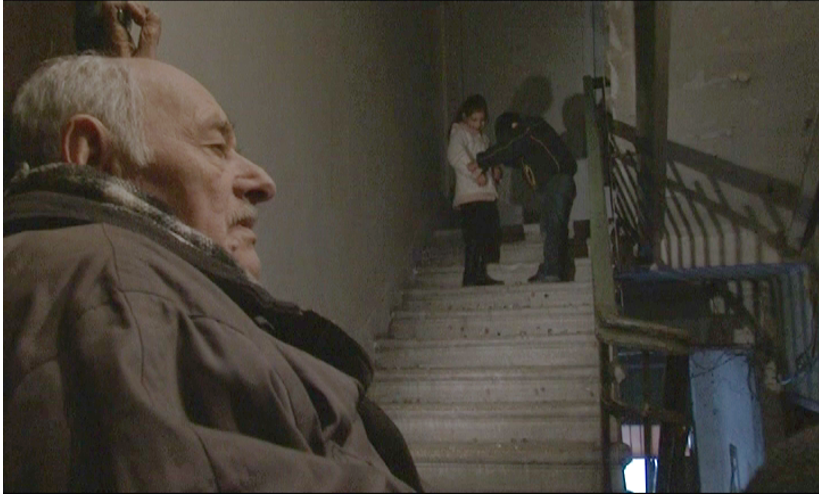
Gabo is a student at the University of Theater and Film and, at the same time, has to work at a monitoring site, where, due to fatigue, he falls asleep, and it is at this very moment that the film begins. A grotesque-looking man enters the office, who turns out to be Gabo’s boss. He terrorizes and insults the junior employee in every possible way, as a result of which Gabo spills freshly brewed coffee on him and runs away.
Thus, he finds himself unemployed and in great danger without even realizing it. In several parts of the film, a fish left without water is seen, the symbolism of which is directly related to Gabo. Gabo is undoubtedly trying to survive in the world and go with the flow, although his social status does not allow him to stay in one place. This is also confirmed by the fact that the boy moves into a new, but for him, completely cramped apartment, which indicates that he does not have his own place in the city, which further aggravates his situation. In short, Gabo is exactly the character who evokes a feeling of empathy in the audience.
One evening, there is a knock on his door. Gabo opens it. A hooded man with a cane is standing at the door. Suddenly, Gabo falls onto the floor, already writhing, and there is blood all around. This unknown man is his former boss, who could not stand the insults from the boy and decided to teach him a lesson. He beats him severely, inflicts a thousand humiliations on him, and leaves.
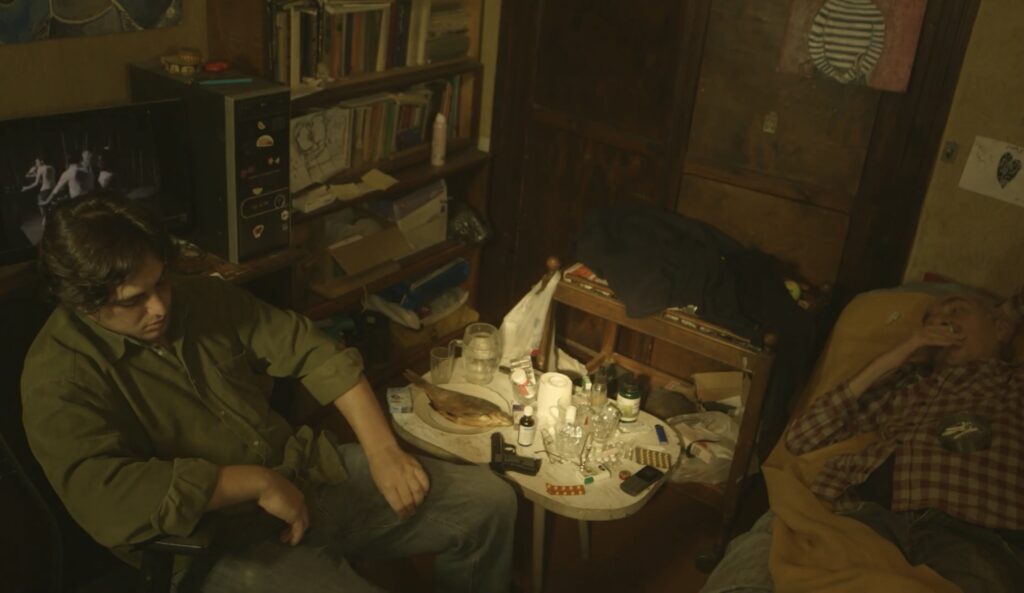
Although the transformation that the boy undergoes after this incident is not shown in the film, it is clear that Gabo, blinded by the desire for revenge, comes to a radical decision - he must not leave things like this. He returns to his hometown, where he finds his grandfather, who is sick and bedridden. Gabo, embittered, searches through every drawer of the house, and when he finds something, the exhausted boy and the gun in his hand are fortunately noticed by his grandfather, who knows his grandson's character best. He asks him to leave the gun. Gabo is torn between two extremes, although he himself knows very well that he is not the kind of person who would take such a pathetic step. Murder and violence are not in his nature, because he has an honest heart and no matter how hard he tries, he knows that he will never be able to pull the trigger.
Suddenly, Gabo sits down on a chair, facing his grandfather and the situation changes radically. There is fish on the table, the film "Nights of Cabiria" is on TV, and Gabo keeps a gun. Tomorrow he will go and buy flowers to the girl he loves, and the thirst for murder disappears from his mind forever or else he will die. The film ends with it.
People caught between the wind and fire often do not find the strength to hold on until they make a mistake, but in reality, there is always hope everywhere. Violence has never been a solution and never will be. Violence begets violence, and this principle always works this way. Cinema also shows this, and not only cinema, but other fields of art as well.
Although Gabo's character is not a direct embodiment of the social situation that young people often find themselves in and what the director wanted to show, he is still a well-described archetype. Thus, both the actor and the character fulfill the film task and convey what is being said to the audience in an understandable way.
This film is the director's first feature film, and like most student films, it certainly doesn't stand out in terms of technical strength, which is noticeable even to the naked eye, although it is clear that all this should be a sign of motivation and progress for the director, and it might be in future.
Sophio Chitaladze