
Abkhazia and the topics of displacement are very common in Georgian cinema. After the 1992-1993 conflict, many people lost their homes, families were separated from each other and thousands of people were forced to settle in other places. This history is still important for Georgian cinema. Directors often return to this topic and show people's pain, loneliness and disappointment from different angles and directors will always have something new to say as long as this conflict exists.
Apart from pain, films with similar topics often highlight resilience, mutual assistance and the strength that can save a person in difficult times. That is the reason why films about Abkhazia and displacement not only create historical material but also teach us how to approach difficult human stories with compassion.
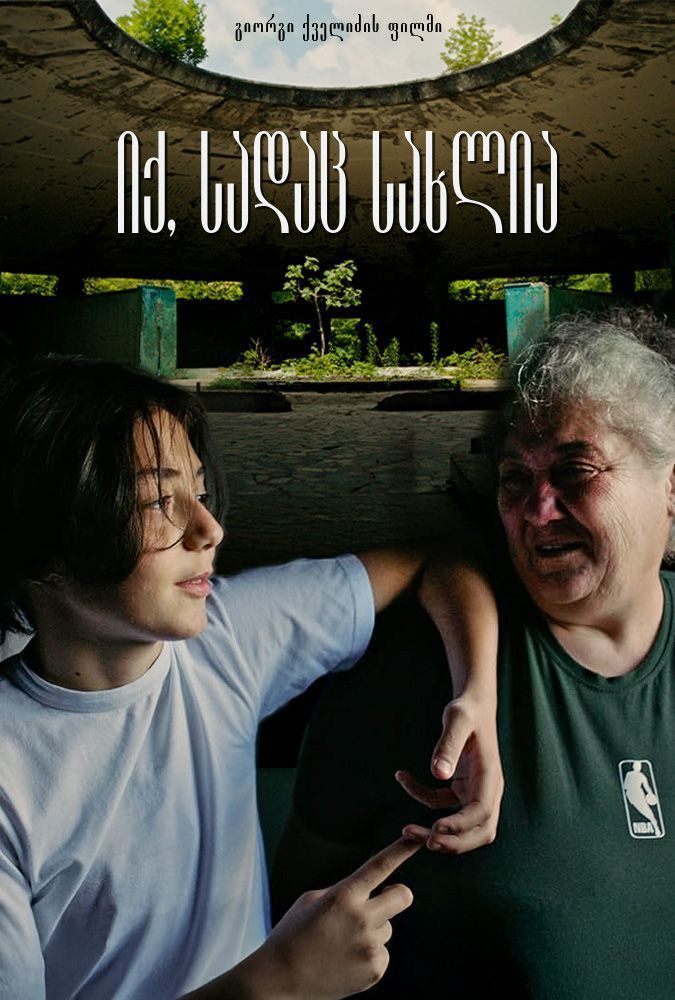
Giorgi Kvelidze worked on the topic of displacement in his documentary film, “On the Way Home” (2024). Its action begins neither with characters, nor with dialogues or with human drama, but with space, with the environment that has been silently watching human pain, loss, and small sparks of hope for decades. This is the half-ruined Tskaltubo sanatorium, once a symbol of health, rest and healing but today a temporary shelter, however, if you look closely at its ruins, you will realize that this space has its own soul, breath and memory.
The building appears as the main character here. There is an impression that the director wants you first to become friends with the environment and only then listen to human stories. The camera slowly, almost imperceptibly, moves through the sanatorium. A half-destroyed, but still solidly standing building appears. Some of the windows are broken, the ceiling has collapsed in some places, the floor makes a creaking sound. Despite the rusty facade and moss-covered stairs, the building does not lose its grandeur. In the small rooms, old furniture, imported items and a few beds show that life still goes on here. The sanatorium has become a temporary shelter for people who said goodbye to their homes and are looking for new housing. From the very beginning, it is clear that space is not just a decoration here, it is the main character of the film – a silent but constantly acting force that determines our heroes’ lives.
As we get used to the environment, the director slowly introduces us to the people who live among these ruins. The first person to appear on screen is 81-year-old Iamze. She describes her displacement from Abkhazia as follows: “Words cannot express how miserable my trip was…” A short sentence but a huge story about hardship. She spent a large part of her life in exile, in the Tskaltubo sanatorium. Her voice is calm, but each word painfully carries the weight of past memories, a lost home and the everyday life she left behind in Abkhazia. Iamze tells how the war became an inseparable part of her family, how she lost her son, how she sent her second son to emigration and still retained the strength to live. Her character is not a tragic figure who only exudes pain. Conversely, the director shows us her everyday life, as she slowly moves through the corridors, looks at old pictures, spends time reading a book and watching a TV series. Everything around her reflects nostalgia. She is a symbol of strength and gratitude that remains in a person despite the fact that her home and living environment have been taken away from her. Abkhazia is still visible in her eyes and nothing will ever replace it in her life.
Nikusha is a 12-year-old boy who has never seen Abkhazia but he knows his roots and family adventures from his grandmother's stories. He already grew up in a sanatorium and his childhood goes here, in the ruined rooms and corridors. He manages to perceive the events of Abkhazia as if he were there himself, you can see missing, pride and the longing for something unattainable in his words and eyes. Nikusha's mother has gone to work in Turkey, the family is divided, one part is in a sanatorium, the other abroad, but Nikusha looks calm, plays, studies, manages to be in the usual rhythm of life. His character shows that children can make a temporary shelter part of their world and emotionally unite with the past, which exists only in stories. Nikusha is a symbol of the fact that the pain of displacement is passed down from generation to generation but warmth, the natural ability to play and exist, is still alive in childhood.
The camera work is one of the most distinctive aspects. It moves through the corridors almost with a stomp, slowly inspecting the building: the walls, the ceiling and the floor, peeping into every crack. The camera is often distant from the characters, does not get close or invade their personal space. This distance expresses respect but at the same time allows the viewer to follow the characters' everyday life in a slow, natural rhythm. It captures everything in such a way that the viewer begins to think what life is like in such a space. The cameraman establishes a mysterious connection with the viewer, which enhances the emotional intensity of this documentary.
Archival material is included with an important function. It creates an immediate context of the past. Shots of the displacement from Abkhazia – people running, abandoned houses, tanks and explosions silently describes the fear and the helpless hardships that people experienced. The director does not add background music or text commentary. The archive is dramaturgically integrated into the film's narrative and allows the viewer to see with their own eyes what is happening during the war and displacement.
The archive is especially effective in parallel with Iamze's stories. Old footage reminds us that today's life is directly connected to the past, which exists only in memories. The archive footage does not cut into current footage but is organically built in, as if slowly, delicately telling the viewer the story.
This material creates a sense of antiquity and enhances the reality of the people living in the ruins. The inclusion of the archive in the film shows that displacement is not just a problem of physical displacement, it is a lifelong longing that is inherited from generation to generation.
The phrase is heard in the film: "If we had not sheltered them, what would have helped us?" People thank the sanatorium as if it were the last living being. This remark is an acknowledgement that a person always finds that one point that temporarily stabilizes their life. The sanatorium is not a home for them but a place that has spent difficult years with them.
Finally, the heroes move into new apartments. The rooms are clean, the walls are not cracked, everything is in order, as if life is going smoothly now but the question still remains: where is actually their home? Where they were forced to leave from or where they lived for years in times of hardship, where everything keeps their stories? Or maybe in new buildings, where everything is in order and comfortable but this does not heal the heart.
A home is not just walls, ceilings and furniture. A home is a place where you feel safe, where you are not afraid at night, and in the morning you wake up with joy. In Iamze’s eyes, you can feel that her inner home is in Abkhazia. She spent her youth there, she had a family there, she had peace and warmth there. Nikusha, who has never seen Abkhazia, also feels that his roots are there, deep in his heart he dreams of being able to touch it.
This film shows that being at home is not just a physical existence, but a feeling that connects a person to the past, history and family. When watching such a film, the viewer begins to understand that displacement is not just a political issue. It is a human tragedy that each family experiences differently. That is why films that continue these real experiences remain necessary and important, so that what was once called home is not lost and we constantly ask ourselves: Where is our place, is it where we feel truly at home?
Teona Vekua


