
People are lonely. They are born, grow up and still cannot find their place in the world. They suffer from an existential crisis and leave this world often not knowing what love is. They build their happiness on someone else's misfortune and they are not happy themselves in the end. Some people love someone else's other half, openly or secretly and try to destroy their family. It is not always the woman's fault in this story. Men also make mistakes, and, unlike women, society does not throw mud at them so often.
This injustice further exacerbates the inner emptiness that many people avoid. People are accustomed to judging others when they are afraid of being alone with themselves. Everything still comes to the point that walls built on others’ ruins will never be strong. Many people look for warmth where there is only passion or selfishness and do not understand that true relief is not in taking away from others but in finding themselves. As long as society divides sins by gender, the world will still be full of lonely and disappointed individuals.
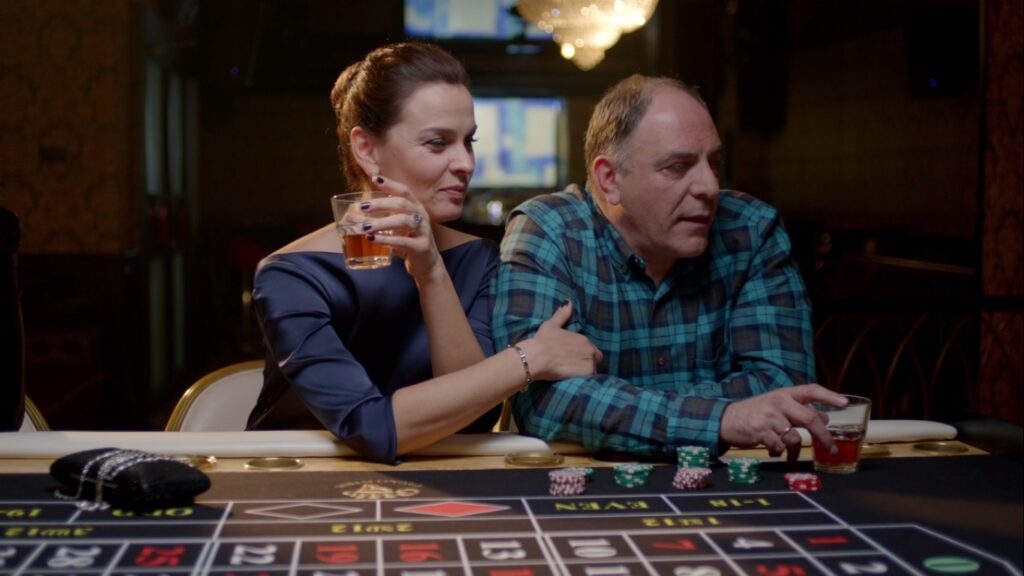
The main character of Margo Zubashvili’s film “Ana” (2017) lives in just such an illusion. She tries to fill her loneliness with hope that doesn’t really exist but here one of the film’s main problems becomes apparent: the audience knows almost nothing about the characters’ pasts. The film lacks information about the beginning of this story: Ana might have been in Irakli’s life earlier and his legal wife, Lika appeared later? When information is so scarce, it’s difficult to blame any one side unequivocally. This is just one piece of the puzzle, the full picture of which the director makes inaccessible. The information vacuum creates an artificial barrier for the film and prevents the audience from fully sharing Ana’s pain on a human level.
The question arises: is Ana's behavior egoism? At a glance, the violation of someone else's family idyll can be called selfishness but deep down it is more of an existential despair. Ana needs someone to rely on because she is tormented by a panic fear of loneliness. She wants to be useful for someone and have a "shelter" in the form of another person but the main moral problem emerges here: trying to fill her inner emptiness with someone else's life always ends in a disastrous outcome. Lika has what Anna needs so much - "family stability" and children. This tragedy is also exacerbated by the fact that everyone knows about Ana's condition, including Irakli's wife. This knowledge turns Ana's "secret" pain into a farce and makes her helplessness even more visible.
The musical choice in the film is particularly interesting and is obviously not accidental. The lyrics of the song “The Sun Is Sleeping” – “I am gazing at the path of the dream with dreaming, I remember that I loved you and I believed in you” – reflect the common emotional deadlock of all three characters. These words raise the suspicion that Irakli may have promised Ana to break up with Lika and start a new life. Ana’s “Path of Dreams” is based on this promise, which has remained an illusion. The music here is a kind of proof that trust in this triangle has long died and only pain remains which continues through inertia.
Ana’s reaction to Lika’s pregnancy best reveals her true face. When she learns that the wife is planning an abortion, her action is not humane or ethical but purely manipulative. The woman is clearly not a principled opponent of this procedure – when she first hears this news, she does not have any special emotions. So why does she go to her rival and ask to keep the child? Here, Ana's selfishness reaches its peak. Obsessed with the fear of loneliness, she wants Irakli's child to be born anyway, so that Lika will suffer even more from the new situation. At the same time, she wants to have something "in common" with the man she loves. For her, the baby is not a living being but a tool for establishing a connection and gaining a psychological victory over her opponent.
If Ana is the “third” in this story, then who is Irakli? He is a man who plays on both women’s nerves skillfully. Which of them is more of a parasite? Irakli does not break off relations with Ana just because he feeds on the warmth and recognition he receives from this woman. He is a typical emotional consumer who simultaneously benefits from Lika’s patience and Ana’s despair. Irakli does not make a choice not because he is confused but because this double game is an ideal comfort zone for him: he receives stability and family comfort from his wife, and from Ana - the intense emotional dose that this obsessive love offers. His passivity is not a mystery, but an escape from responsibility and a cold-blooded use of someone else’s resources. Unfortunately, Irakli’s character in the film is so inactive and colorless that it is often incomprehensible why two women fight for him with such self-sacrifice.
Lika and Ana are like two sides of the same coin in the film. Although one is a wife and the other is a lover, they are united by a common tragedy: both of them define their identity by their connection with Irakli. Lika clings to status and “family stability,” even if it is just a facade, while Ana clings to the illusion that she will escape loneliness by being with someone else’s man. The director shows us that there is no winner in this battle, as both women sacrifice their self-esteem to a man who only manipulates their feelings.
The director actively uses the environment to create this suffocating atmosphere: night, closed spaces, and minimalist interiors. The symbol of water has a special meaning. The water that suddenly appeared in the house resembles the decay, collapse, and “drainage” of the relationships between these people. Water, which is usually a symbol of life and purification, here becomes a destructive force that slowly fills Anna's world. There are too many symbols in the film. The director seems to be trying to forcefully "deliver" the tragedy to the audience where it would be better, simply showing people to the camera without any artificial decorations or overloaded metaphors.
In its mood, this film resembles Michelangelo Antonioni's film "The Adventure" (1960), however, no one dies here and no one disappears unlike Antonioni - physically everyone is in their place, which makes the tragedy even more unbearable. In Antonioni’s film, physical disappearance is only a background, the main thing is the inner emptiness of the characters: they are in the same space, although in reality they never meet each other. In "Ana" this kind of alienation is also evident, where the action seems to be frozen and the characters are locked in their own illusions and cannot find a way out of this impasse.
The plot shows that the guilt and responsibility are equally distributed among all three characters. Irakli's selfishness, Ana's obsessive illusions and Lika's silence feed each other and create a vicious circle from which no one wants to escape. Each of them chooses familiar pain because unknown freedom is more dangerous for them. This is not just a story of betrayal, it is a chronicle of voluntary self-destruction, where the victim and the abuser constantly change places.
Eventually, what is the film about - the fear of loneliness or selfishness? About a selfless woman or a man playing the game? Principally, Lika's character also lacks self-respect. The question arises: why did she stay with her unfaithful husband? Only because of the children? The thought that they are constantly talking about her tragedy behind her back might not be harder to bear than loneliness? The film does not provide answers, it only exposes the moral ruins on which these people try vainly to build their lives.
Barbare Kalaijishvili


