
The established rhythm of Georgian cinema life has changed over the past few years. Creative processes have become intertwined or, more precisely, overshadowed and relegated to the background by currents of politics, civic engagement and protest, leading to a relative decline in active engagement with the art form itself.
Yet, despite these changes, films are more or less made. They participate in international festivals and even win awards; festivals and competitions are still held in Georgia as well. In such circumstances, it has become evident that there is much to renew, rediscover and clarify.
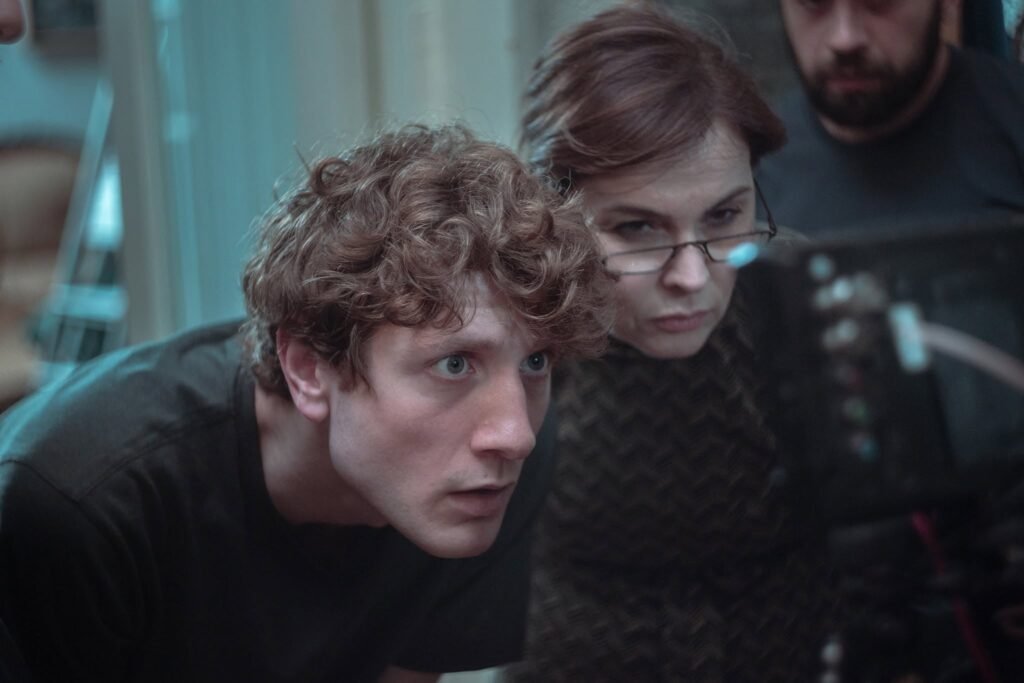
This is exactly the case in Nutsa Alexi-Meskhishvili’s (also known as Salome Alexi) film “Where Are You?” (2023, based on her own screenplay), which deals with the need for changes in society, the country and individual lives as well as everyday life and common problems of modern society.
This is exactly the case in Nutsa Alexi-Meskhishvili’s (also known as Salome Alexi) film “Where Are You?” (2023, based on her own screenplay), which deals with the need for changes in society, the country and individual lives as well as everyday life and common problems of modern society.
The director continues the main topic of her films with new variations and “lengthens” the primary narrative thread of her mother, Lana Gogoberidze—by presenting generalized stories about women and their destinies within an indifferent and unfavorable society while making various transformations, new circumstances, turning points, new discoveries, or making of choices. Through several episodes, a brief fragment or a passage from personal life too.
The film combines portraits of specific individuals, characters, society, a country and a city, somewhat solid-dimensional and sometimes formless, ephemeral, and intangible; such nature of theirs reflects the filmmaker's vision, expressed through artistic forms, means and stylistics choices.
“Where Are You?” is a multi-layered film featuring an ensemble cast as it was in Nutsa Alexi-Meskhishvili’s previous works; it tells the stories of individuals who exist together or independently and who come across with Eka and one another in diverse settings, circumstances and locations.
“Where Are You?” is a multi-layered film featuring an ensemble cast as it was in Nutsa Alexi-Meskhishvili’s previous works; it tells the stories of individuals who exist together or independently and who come across with Eka and one another in diverse settings, circumstances and locations.
The events unfold around Eka and her family members, who differ sharply in their lifestyles, temperaments and interests. The central narrative is built on the relationship between Eka and her adult son (Sandro Samkharadze). They no longer understand each other and have nothing in common; perhaps they never did. "Laws of nature" governed everything up to a certain point in their lives. But times have changed and something must be changed as well. Sandro decides to leave and join the father who abandoned him years ago as he is driven by "new laws of nature" and a desire to escape his mother's "oppression" and constant control.
Nino Kasradze creates the image of a woman entangled in a labyrinth of problems. She is surrounded by a seemingly free and individual space, however, in reality it is accompanied by confinement and isolation, a state demanding awareness and evaluation, first and foremost, from the protagonist herself.
Sandro Samkharadze’s character is a young man actively and steadily striving to find his own place, his true self, and solid ground – even at the cost of a conflict with his mother, whether internal, veiled, or overt in order to break free from her influence.
Eka’s sister (Baia Dvalishvili) clearly and precisely "knows" how Eka and others should live, and she believes in her truth. She is a firm and confident woman. She acts as a bridge – a connecting link – between the past and the present, serving as a metaphor for a certain segment of society, however, she remains a very vivid character, defined by distinct, true-to-life traits.
Eka’s sister (Baia Dvalishvili) clearly and precisely "knows" how Eka and others should live, and she believes in her truth. She is a firm and confident woman. She acts as a bridge – a connecting link – between the past and the present, serving as a metaphor for a certain segment of society, however, she remains a very vivid character, defined by distinct, true-to-life traits.
There are many such "family" encounters, meetings and accidental crossings of paths with clients, buyers, or owners of flats for sale. Among them is the character portrayed by Tamar Mamulashvili: an aggressive, unstable woman who has largely cut herself off from the outside world. She lives in a realm of illusions and imagination, withdrawn and filled with suspicion and mistrust toward those around her.
There are many such "family" encounters, meetings and accidental crossings of paths with clients, buyers, or owners of flats for sale. Among them is the character portrayed by Tamar Mamulashvili: an aggressive, unstable woman who has largely cut herself off from the outside world. She lives in a realm of illusions and imagination, withdrawn and filled with suspicion and mistrust toward those around her.
მის გვერდით, თუ პარალელურად, არიან ადამიანები, საზოგადოების სხვადასხვა კლასისა და თვისებების, სხვადასხვა სოციალური ფენისა და მენტალობის მოქალაქეების ტიპური წარმომადგენლები, რომლებიც სხვებთან ერთად სახლობენ ამ ქალაქში და მის ცხოვრებაში ბევრ რამეს განსაზღვრავენ და ეკას სხვადასხვა მიზეზით ხვდებიან.
Each such encounter occurs in a different setting. Every such flat, organization or institution, whether in old or new neighborhoods, in historic or modern buildings among structures under construction or doomed for demolition, in the city or the countryside, is defined by specific features and elements, or is utterly ugly and bland (yet equally characteristic and expressive). Altogether, they reflect the social and mental state of the inhabitants, embodying the defining traits of the past, the present and even the future (as seen, for instance, in the episode involving the famous Melik-Azaryant’s house and its surroundings).
Sometimes these houses, streets, yards, interiors are empty or half-empty. Houses, flats and yards are emptied or "await" new owners. The distance between people, countries, cities or villages is not merely physical, kilometers but internal; locked by visible and invisible walls, separated and distanced by “shut” and latched doors. The cameraman and the artist create an evocative "portrait" of this environment, ranging from details to wide panoramas, seemingly specific and familiar, also symbolic and generalized though.
It is true that respect is still paid to the country’s past, to the history of urban life and to figures once renowned (a street is even being named after Eka’s father), yet, all of this has lost its genuine value. This is especially the case against the background of the problems and circumstances that Eka personally experiences or those unfolding within society and the country at large and considering what might happen next.
The social status and image of a once-renowned and privileged family no longer carry the same “weight;” the once-vivid colors have lost their intensity, no longer works. Long-standing, "traditional" customs and ways of life – seemingly firmly established – have been lost. The very concepts and foundations that were considered the prerequisites for a secure and carefree existence until recently, have proven futile, have been shaken and/or have vanished altogether.
The atmosphere of generalization and shared extension across time and space “closely following” the conventions of the genre is heightened by Aleksandre Kordzaia’s ("Kordzi") music. It is initially melodic and dynamic, shifting into an asynchronous interplay of sounds and noise, continuing through the arrangement of familiar thematic chords and the organic transitions of original musical phrases. It fills and charges the atmosphere, hinting at the essence of the work.
During Eka’s "journeys" through the streets and from house to house – driven by various motives and purposes – she visits a theater to see a director she knows (Malkhaz Kvrivishvili). There, she attends a rehearsal of Henrik Ibsen’s “A Doll’s House” and listens to actress Anano Makharadze perform Nora’s monologue. It might seem an ordinary encounter might seem ordinary, Nora’s existence takes on a symbolic and multifaceted significance within the film as she is a woman whose ultimate goal is independence, freedom and liberation from the confines of family, home and artificial obligations. For Eka, “A Doll’s House” and Nora’s character serve as a crucial pointer – if not a roadmap – indicating what she must do to secure freedom for both herself and others.
"Where are you?" is the central question frequently repeated in the film – insistently asked by Eka with reference to her son and during her search, at any time of day, with intensity and unfailing persistence. It is precisely because of a refusal to answer this question that the son leaves home, preferring an independent life.
Who is Eka searching for? Her child? Her ex-husband – who had left, vanished without a trace, and then unexpectedly reappeared? A time gone by? A place in the sun? Or perhaps herself?
It seems that Nutsa Aleksi-Meskhishvili does not so much direct Eka’s life as "obediently" follow it, tracking her every move from work visits (real estate dealings) and family obligations (settling her father’s estate alongside her sister) to caring for her son (literally pursuing and keeping watch over him) and personal pursuits (attending theater rehearsals). In doing so, it becomes apparent that the attachments to people and places exist now only in the imagination, having vanished from reality.
Eka is already quite old to begin the process of self-discovery. This is another problem of hers as she let the time for it slip away because she (presumably) gave everything to "others," to people who had no need for it while sparing nothing for herself. More precisely, there came a day – a stage in life (where the present became hollow and the path to the future was no longer visible) when she realized she had lived in a void, and "in vain."
The director crafts this atmosphere of emptiness and weightlessness through precise nuances, step-by-step, shaping the character of individual episodes and the overall artistic vision.
"Where Are You?" is a film about a society and the people within it, individuals for whom much of the past is already behind and for whom the current reality, with stark clarity and harshness disrupts their tranquility and the sluggish rhythm of their daily lives. It is a film about those whose shared life paths (even among the closest of kin) diverge – a situation metaphorically reflected in the routine of selling flats – as each person chooses their own way, guided by personal rules, perceptions, and goals, seeking to establish a place for themselves within their own private space of existence.
Lela Ochiauri


